Showing posts with label Tutorial. Show all posts

DIY "Custom" Roman Shade

August 22, 2013

Window coverings are expensive. Custom options made with the fabric of your choice are even more costly. While I'd love to be able to afford something custom made by an expert, it's just not realistic for me.

When I first started humming and hawing over what I was going to do to manage light and privacy in the living room, I thought I might use cheap pull down shades behind a fake roman shade. But when I was at Lowes, they had discounted some pretty high quality shades down to $8 from $32. There were only two left in the size that I needed. The problem was, they weren't the same colour.

And then I had an idea...why not layer some fabric that I like over top?

So I grabbed them, and then the next day ordered some fabric samples from Online Fabric Store and Tonic Living. In the end, I ended up ordering the fabric I had been leaning towards since I started browsing - this P. Kaufmann fabric from OFS.

paul kaufmann arboretum cloud
P. Kaufmann Arboretum, Cloud

It didn't take very long to arrive, but they do use UPS to ship so I had a surprise $20 charge at the door. Blerg.

Anyway, here's what they ended up looking like (well, one of them. I just finished the second one before sitting down to write this).
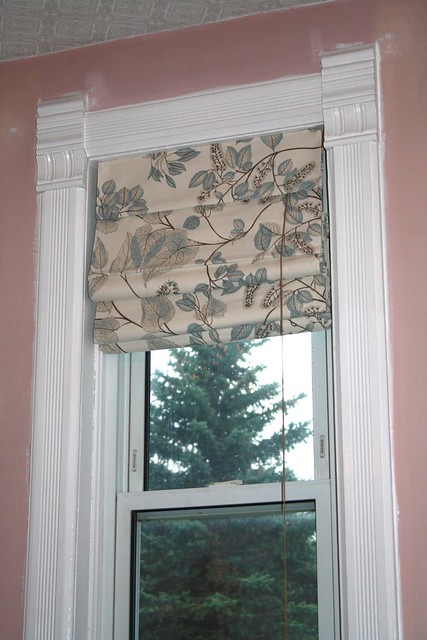
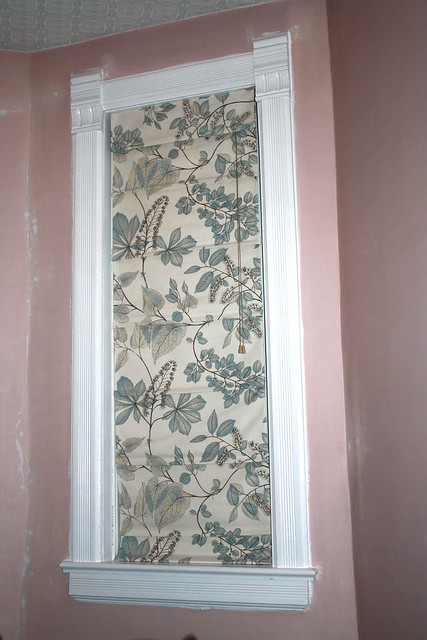
DIY custom roman shadeDIY custom roman shade

I was a little worried that they wouldn't fold up properly with the extra fabric added, but it doesn't seem to be a problem.

Here's how I did it!

Lay your fabric out, and place your shade over top. Cut around the shade, leaving enough allowance for you to fold over the edges.
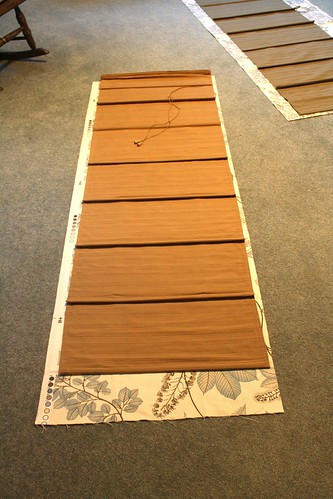
new fabric on roman shade

I didn't have as much room as I'd like, because to be honest, I misordered (apparently that's not a word). I always think in meters as opposed to yards. The two yards I ordered just barely, barely covered both shades and their included valances.

Next, iron out the creases in your fabric. This was the first time I'd used an iron and it was strangely satisfying.

These shades are not no sew, although the amount of sewing is pretty limited. I used iron on fabric fusing tape to adhere the new fabric to the shade.

To increase the chances of the shade folding properly, I followed the contour of the original shade. That meant using the tape on both the front face of each folding point, as well as the back side. I hope the pictures below explain what I mean.
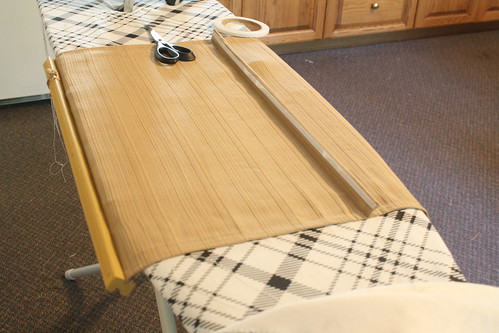
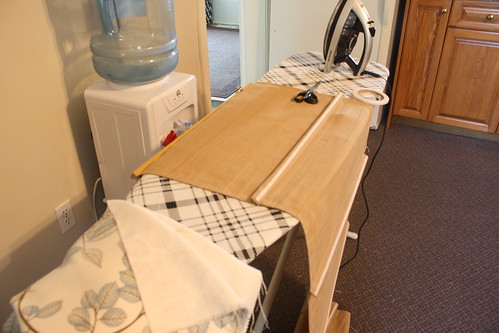
fake custom roman shade

I moved top to bottom, starting by attaching the fabric to the top of the shade. If you're using a patterned fabric, make sure you're attaching things the right way! Although the tape stays tacky enough to move it if you need to, it's still a pain. If you don't have much leeway with your side allowances, really make sure you're smoothing as you go and checking to make sure you have enough room to fold over the edges. I also found it easier to keep the fabric in a roll, rather than flipping it back and forth over and over again.
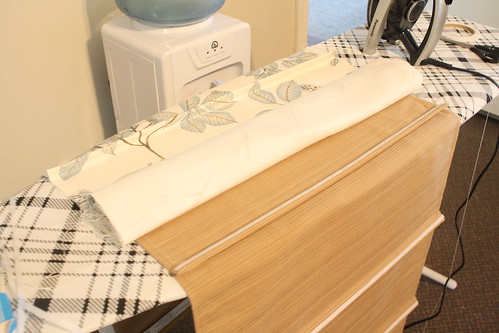
fake custom roman shade


When I reached the bottom, I didn't do the very bottom edge. To get a nice fold, I decided I would do the sides first. Before starting that, though, I decided to hold the shade up to see how it was taking shape, and I was a little worried. It looked sort of baggy. But once I did the sides, everything tightened up.

Apparently this is where I stopped taking pictures. Use the fabric tape along both sides, and then when you reach the bottom, fold up your finishing edge.

At this point, you'll need to do a few stitches at each point where the fabric folds over the original shade. Otherwise, when you pull the shade up, the extra fabric that isn't secured will puff out the sides. I hope that makes sense?!

My original shades came with valances attached with velcro which cover the mounting hardware. I actually started with these, and entirely hand stitched the new fabric to them. This was a stupid idea. Don't do that. The only other thing to note in regards to the valances is to make sure that when you fold over your edges, make sure you don't cover up the velcro.

If I hadn't hand stitched the valances, this little project would have gone a whole lot faster, but even with that stupid move, it wasn't too bad. And definitely not difficult.
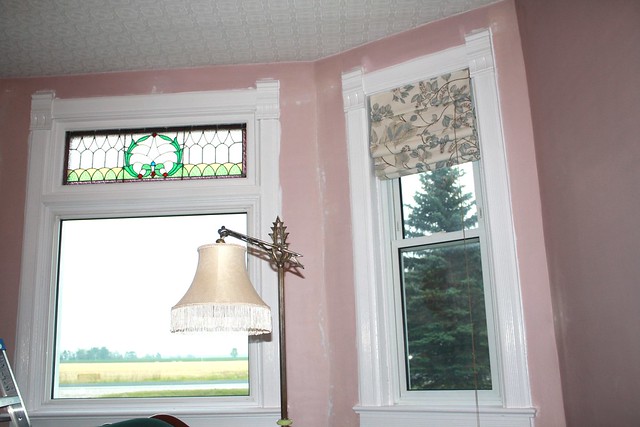
stained glass bay window

In other news, all of the window casings and baseboards have been painted, and I'm hoping to get the walls done this weekend, but don't hold your breath.

Have a good weekend!


Did you like this post? Click here to subscribe and be notified of new posts. You can also find me on Twitter, Facebook, Bloglovin and Pinterest.

How to Turn Sap into Syrup

March 23, 2012

I declared yesterday on Twitter that I wasn't going to be posting this week and that I'd be back on Monday.

Well I lied.

I didn't feel like writing all week, but I feel like writing now.

Funny how that works.

Maple syrup season is pretty much over (already!) so I thought I should wrap up my maple syrup adventure and give you a little breakdown an how to turn your sap into syrup.

Ideally you want to do this as soon after you've collected as possible, because sap doesn't keep all that well. Last year we had close to 60 gallons go bad because we just couldn't keep up. If you have a large space for cold storage, the "urgency" declines. We have no storage whatsoever.

This year the trees weren't nearly as productive, thanks to the unseasonably high temperatures we've been having. The sap was also significantly darker than last year, resulting in a darker syrup. Did you know that there are different grades of pure maple syrup? I didn't know until last year (I was also admittedly an Aunt Jemima lover).


So you've collected your sap and you're ready to produce some liquid gold (seriously, this stuff is expensive to buy).

Turning Sap into Maple Syrup

We like to work in large batches, because we're lazy like that. We're going to do some things different next year, but I'll explain that at the end of the post.
What you'll need:
  • pots (in several sizes)
  • propane
  • something (safe!) to hold your large pot over the flame
  • metal fine mesh strainer
  • 2 high quality candy thermometer
  • 1 hydrotherm
  • several pre-filters
  • heavy duty wool filter
  • funnel
  • bottles and caps

What you need to do:

1. Pour your sap through a fine mesh filter into a large pot. We begin filtering at this stage to get rid of bugs and large bits of debris. Set your pot up onto your propane burner, and boil hard - for a loooooong time.
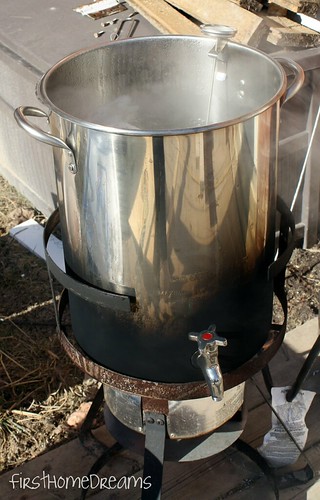
turkey deep fryer for boiling maple syrup

Your eyes do not deceive you - that's a turkey deep fryer. You'll know why in a minute. We like to do the majority of our boiling outside because the amount of water that evaporates from sap is outrageous. We don't have an exhaust fan in the kitchen, and we'd like our house to not turn into a steam room.

2. We boil outside until our sap reaches around 210 degrees Farenheit.  This can literally take hours. And hours. And hours.

3. At this point, we move small batches of sap inside to "finish" into syrup on the stove. This is where the spigot on the turkey fryer comes in incredibly handy! Just throw a smaller pot below the spigot, open it up and fill. No man handling giant pots of boiling hot liquid required.

4. On the stove top, continue to boil your sap until it reaches a temperature of 7.30°F-7.70°F above the boiling point of water. Don't assume that the boiling point of water is constant! Always take the time to boil a pot of water and check the temperature required on the day you're finishing syrup. Humidity and outside temperatures can have a big impact.

5. You've hit the magic temperature - hooray! But you're not finished yet. In order for your sap to officially be syrup, it has to have a certain sugar content. Last year our "syrup" was far too thin, so this year we purchased a hydrotherm to help us get it right. A hydrotherm measures the density as a unit known as Brix. Optimal maple syrup density is between 66.5 and 67.5 Brix (and you can't sell something as maple syrup below 66 Brix).


Using the hydrotherm was intimidating, and it took some digging to find a good explanation of how to use it. I don't really know how it works, but I do know that in order for your sap to be syrup, your hydrotherm needs to be floating in your sample at a point where the level of syrup meets the top of the red line on the hydrotherm. Clear as mud, yes? It makes it even more complicated when the cup you're using to measure isn't clear. And you have terrible lighting in your kitchen so you're using a flash light to peer into the cup.

Side note: I wish we could afford a refractometer. They are magical.

6. Assuming that all has gone well, congratulations, you've made syrup! Now you need to pack it all up for storage. If you haven't already, turn your burner off. Syrup only needs to be at 180 degrees Farenheit for optimal packing. Grab your pre-filter and your wool filter - and stick the pre filter inside your wool filter.

Last year we made a mess. A huge mess. We poured our freshly made syrup into the filters, and stuck the end of the filter into a funnel, and the end of the funnel into the bottle. It was the worst. So this year we bought one of those big coffee urns meant for keeping coffee warm at conferences and the like.


Life saver. Or at least, floor saver.  It made things unbelievably easier, especially since we were using wee 125 ml bottles this time around (because we're giving them out as wedding favours!). We stuck the end of the funnel into our little bottles, and then used the handy dandy spigot on the coffee urn to fill 'em up.

7. Once your bottle is filled, screw on your cap and lay the bottle on it's side for a minute or so. The hot maple syrup will sterilize and seal the cap.

8. Celebrate! Or make pancakes. Or celebrate by making pancakes.

What we'll do different next year:
  • Use a rectangular pan with larger surface area to evaporate water more efficiently.
  • Explore using wood instead of propane.
  • Fine a clear cup for measuring density!

Turning Sap into Maple Syrup 

Have a good weekend!

Psssst! I'm linking this post up to...

Home Stories A2Z


Tutorial: Fixing a Wood Window Sash

January 28, 2012

How to Fix an Antique Wood Window Sash

When my boyfriend and I purchased our century home just over a year ago, one of the items at the top of our mile long to-do list was to replace all of the original wood and wavy glass windows. Big expensive projects have a way of worming their way down to-do lists, and in this case, I'm thankful! It's given us a chance to research old homes and embrace the "technology" of days past. But, do they ever need some work...

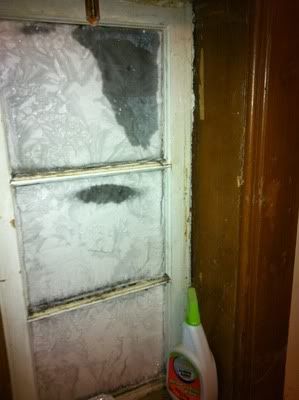
Before.

Believe it or not, a properly restored single pane wood window, combined with a properly fitted storm window and weatherstripping, can be just as energy efficient as the average replacement vinyl window. If you happen to live in an old house, restoring your existing wood windows is an opportunity to keep material out of the landfill and gives you a chance to learn more hands on skills, while maintaining the character and historical integrity of your home. And the best part? If you do it yourself, you'll save money!

What you need:
Heat gun or chemical paint stripper
Steam producing machine
Easy to wield chisel
5-in-1 scraper tool
Needle nose pliers
50 grit, 80 grit, and 120 grit sandpaper (sanding sponges are also great)
Electric sander (not absolutely necessary, just speeds up the process)
Wood filler and/or wood epoxy
Oil based exterior primer
Latex (or alternative) gloves
Glazing putty
Glazing tool
Glazing points
Exterior paint in a colour of your choice (latex or oil based)
Painter's tape

What you need to do:
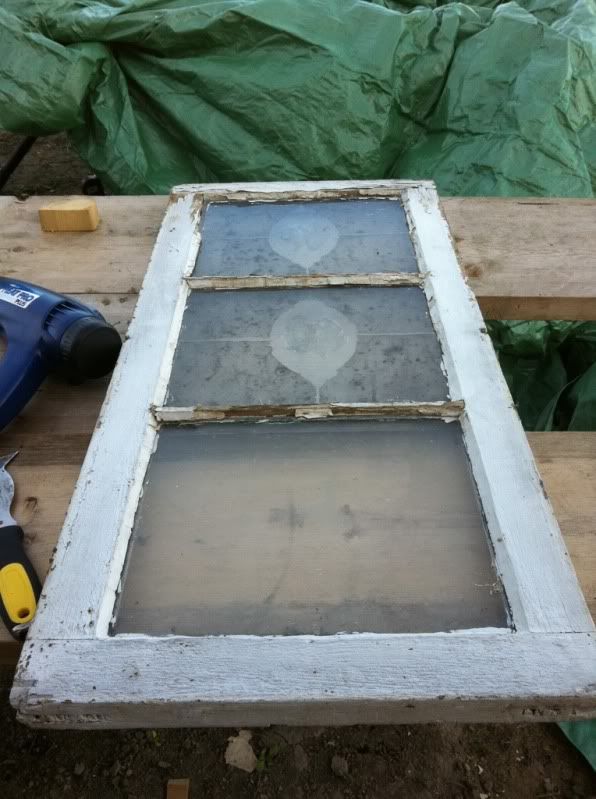
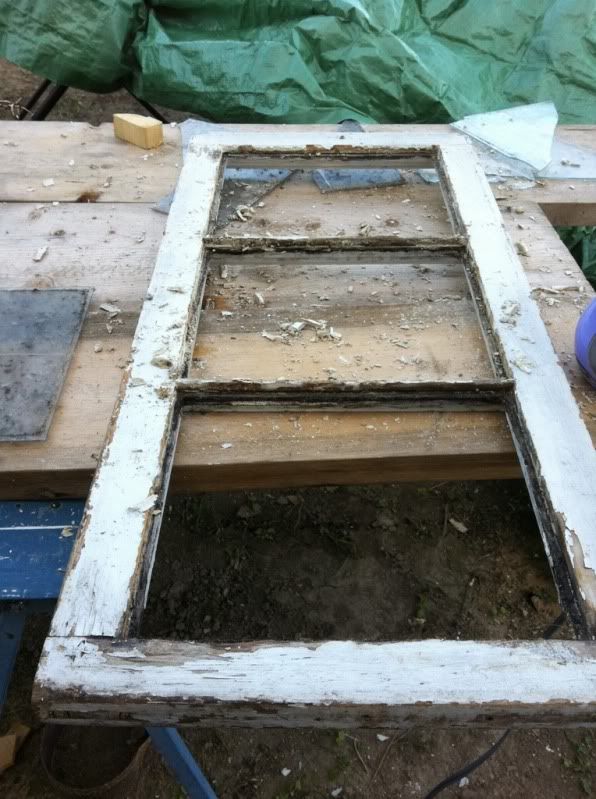
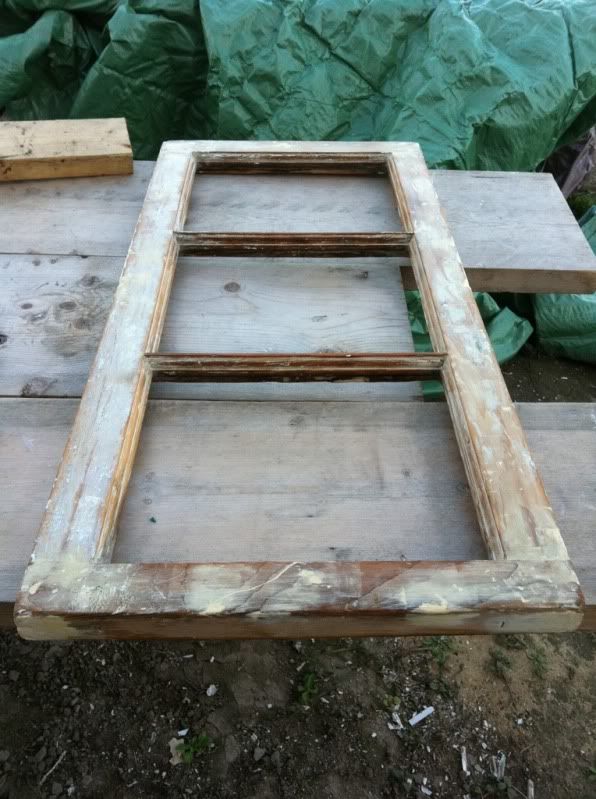
1. Carefully remove the glass from the window sash. Do this by softening the old glazing putty with the steamer. Do NOT use the heat gun! The glass will crack from heat stress. Use the wood chisel to gently scrape away the softened putty (I found the sharp edges of the chisel to be more efficient than the scraper tool). In some places, you may feel resistance. You may have come across a glazing point. These little things help provide strength for keeping the glass in place. Clear putty away from the glazing point. Gently slide the chisel between the glass and the glazing point, and bend the point up. With your needle nose pliers, grasp the point and pull out from the wood. Continue until you have removed all of the putty and glazing points. Your glass pane should lift out with minimal pressure applied to the back.

Cracked glass from using the heat gun. Chunks of old glazing putty being removed.

Glass removed.

2. Remove old paint from the window sash. Work in a well ventilated area and wear a filtered mask. Depending on the age of the window, you might need to check for lead content in the existing paint and handle accordingly. Either a heat gun or a chemical stripper, in addition to the man power of a scraper tool, will make quick work of this step. This task can be tedious - you'll be surprised how much paint has layered up and completely hidden the details of the trim. Ensure to clean up thoroughly and discard any paint chips or chemical residue.

3. If your old window hasn't seen any maintenance in a long time, you may have wood that appears quite weathered. Sand all surfaces with very course grit sandpaper. Repair any gouges or holes with wood putty or wood epoxy. Allow to dry and/or cure, and then sand with a medium grit sandpaper. Finally, sand with fine grit sandpaper for a nice smooth surface. Sanding sponges work great for trim details.

Scraped, sanded, and puttied.

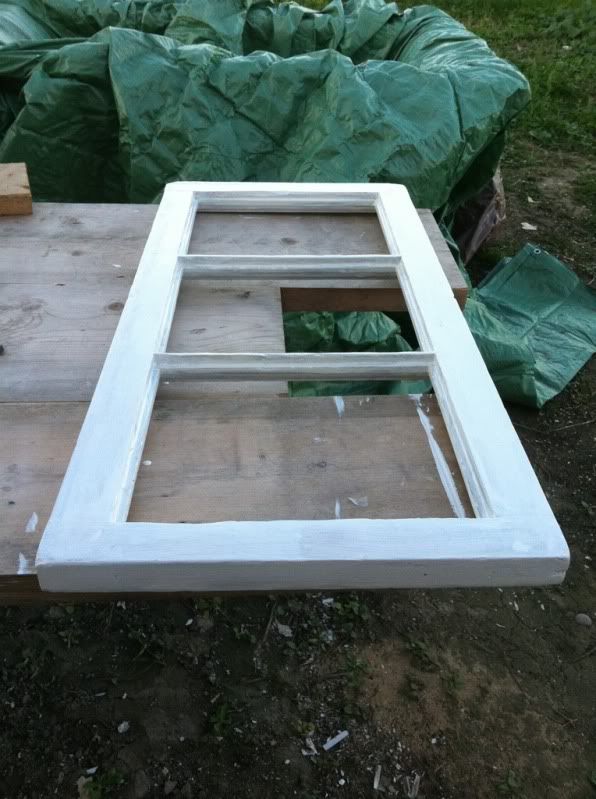
4. Prime your sash with a good quality oil based exterior grade primer. Look for a quick drying primer, rather than a penetrating primer, to keep this step short.
Primed.

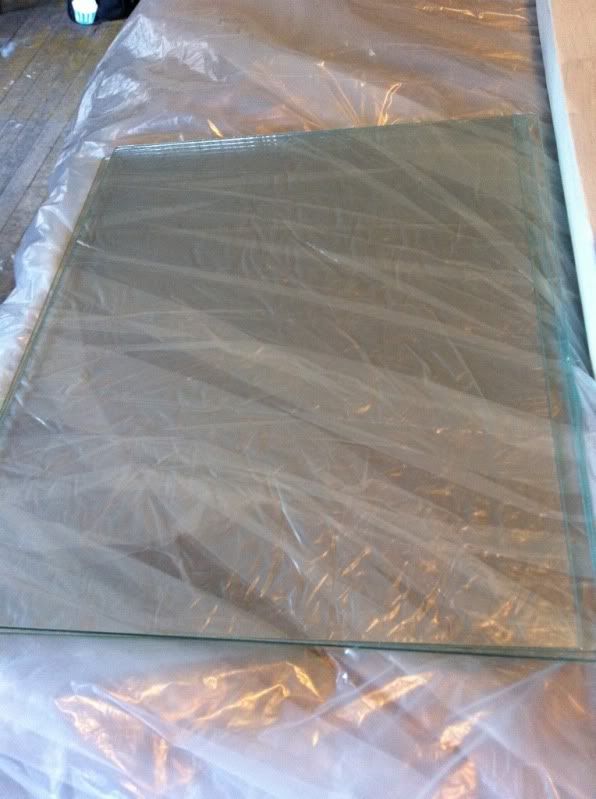
Once your primer has dried, you're ready to re-install your glass. If you managed to remove all of your glass without any breakage, congratulations! If you didn't, don't worry. Clear glass can be custom cut for a very reasonable price. If you would prefer to keep the historical look of wavy glass, keep your eyes peeled in antique stores and salvage yards. Many glass places will cut customer owned glass for a fee.

New glass.

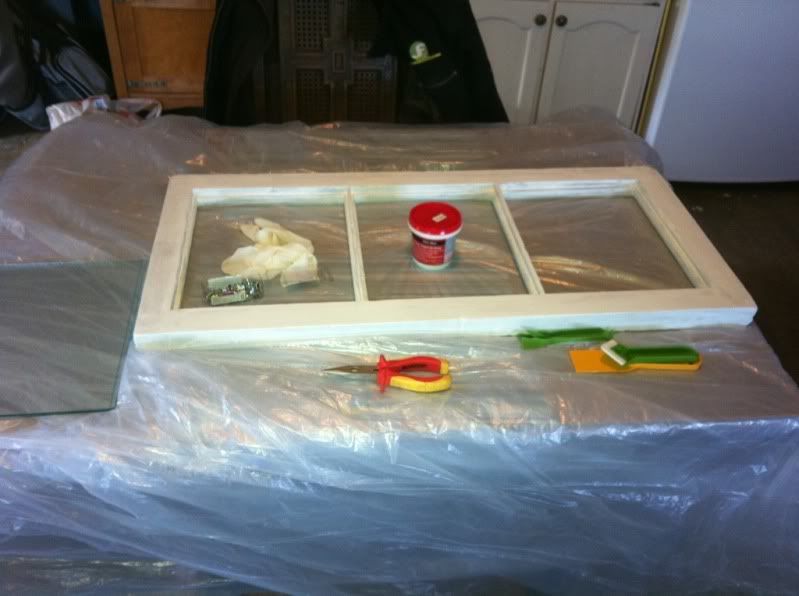
5. Before installing your glass with new putty, set up a workspace where everything you need will be within easy reach.

Accessible materials.

Wearing your gloves, take a handful of glazing putty and warm it in your hands. Create a bed of putty to lay your glass on. This keeps water from making its way between the glass and the wood, which would lead to premature failure of your restoration.

More is better. It's easier to scrape away excess than try to fill in gaps.

Press your glass firmly, but gently, into place. Excess glazing putty will squeeze out the other side - that's okay! Leave it for now.


Glass in place.

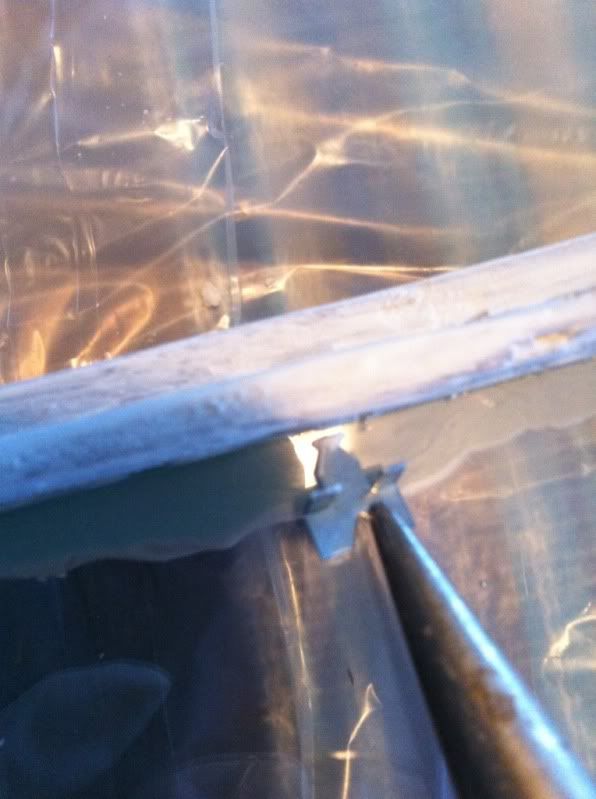
6. Now, replace your glazing points. You can reuse the old glazing points, but new ones are preferred. With your needle nose pliers, grasp the non-pointed end of the glazing point. Firmly press the point into the wood, and wiggle back and forth to penetrate. The number and positioning of your glazing points will depend on the size of your glass. For small panes of glass, one centrally placed point on each side is sufficient.

Installing a glazing point.

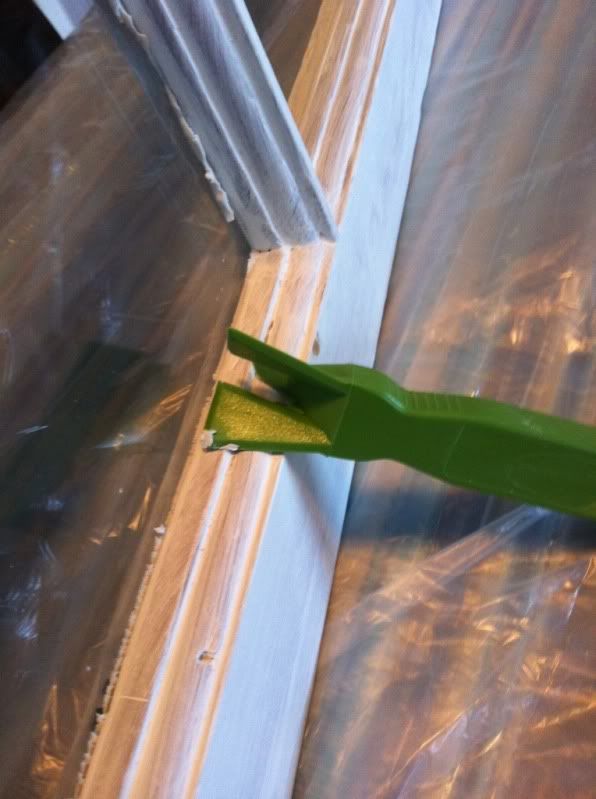
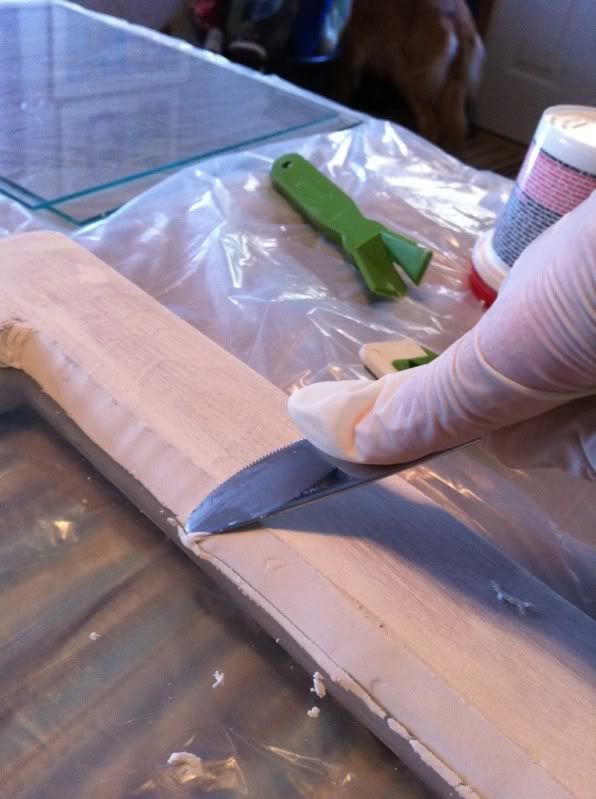
At this point, your glass is secure enough to be able to turn the sash over and trim away any excess glazing putty that snuck out the side after pressing your glass into place.

Pictured is a caulk removing tool, but anything with a well defined edge (like an exacto knife) will do this job.

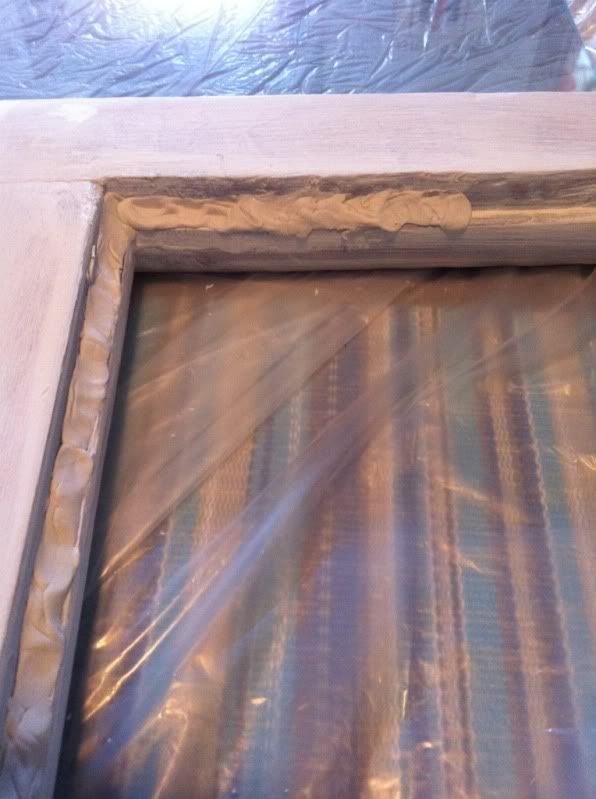
7. Secure your glazing points by applying putty over them. You can either mush lumps of glazing putty into the L-shape created by the wood sash and glass, or you can shape your putty into a "snake" and then mush it in to ensure that there are no gaps.


Smooth your putty using your glazing tool. You want the glazing putty to sit at an angle, to shed water. Your corners should be concave. Any creases may result in water infiltration.


8. When all of your glass has been installed, allow your glazing putty to cure according to the specifications indicated on the packaging. Set time varies tremendously between brands of putty.

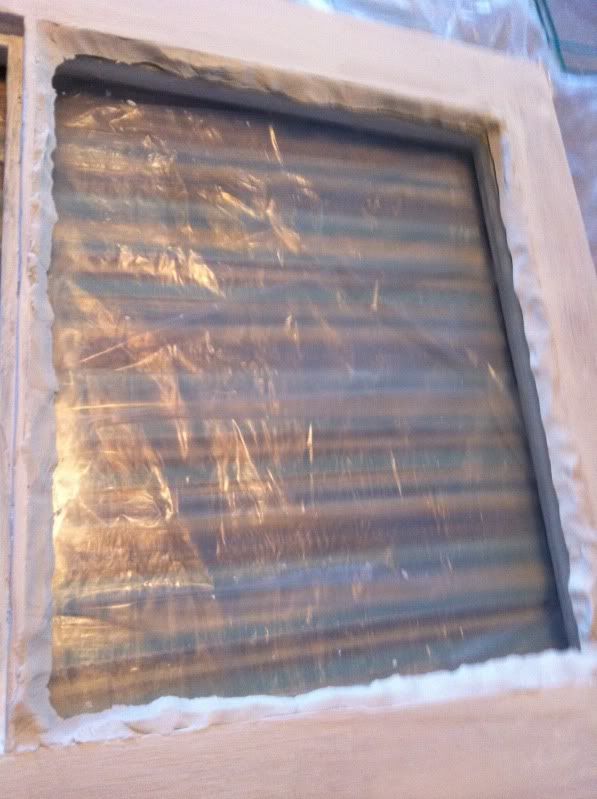
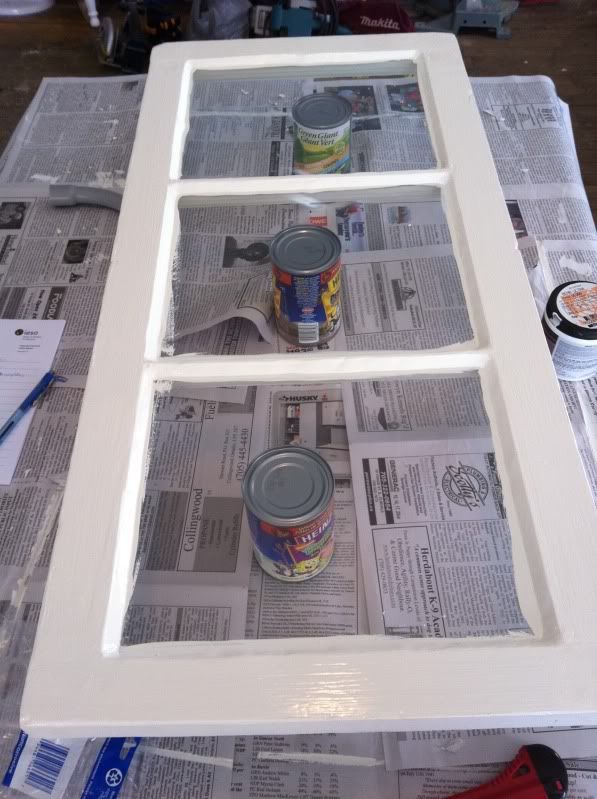
9. If required by the specifications of your glazing putty, apply a second coat of oil based primer to both sides of your window sash. Overlap onto the glass, just enough to completely cover any exposed glazing putty. Use tape to keep your lines tidy.


You'll notice I didn't use tape. I'll get to that.

10. When your primer has dried, apply two coats of exterior paint (allowing sufficient dry time between coats). Ensure you are overlapping all primed glazing putty. When your paint has dried, remove the tape. If you have an aversion to using tape, because you can never get it lined up just right, score a line in the paint using something with a straight edge, and scrape away excess paint and primer using a razor blade or exacto knife.


And then...


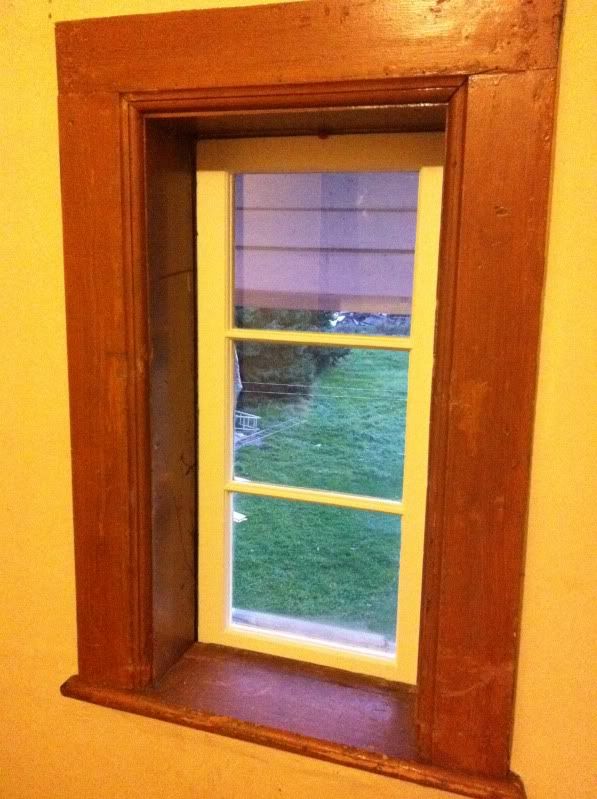
You're done!

Cost breakdown for materials:
Glazing putty $4
Oil based exterior primer $15 (1 quart - enough to do at least half of our remaining 24 window sashes)
Glazing points $2 (for enough to do all 24 sashes in our house, with plenty left over)
Exterior latex paint $4 (for a sample sized pot)
Wood putty $6 (although I already had this on hand, and have lots left over)
Sandpaper and sanding sponges $10
New glass $12

For a grand total of $53. Which may seem like a lot - but when you consider that I have enough primer, glazing points, and wood putty to do many, many more windows, and that I won't need to replace glass in many of them, it's actually quite cost effective. Especially when compared to the cost of a custom sized vinyl replacement, which can run into the the $100s. Plus, a properly restored window, with regular maintenance like paint touch ups, can easily last 50 years or more.

And there's nothing like a little sweat equity to maintain the beauty of your home.

Tutorial: Really Cheap Christmas Wreath

How to Make a Christmas Wreath from Toilet Paper

This is the cheapest wreath you will ever make!

toilet paper christmas wreath

What you need:
Toilet paper
Glue gun
Foam pipe insulation (or other wreath form)
Ribbon
Heavy duty tape
Thumb tack

What you need to do:
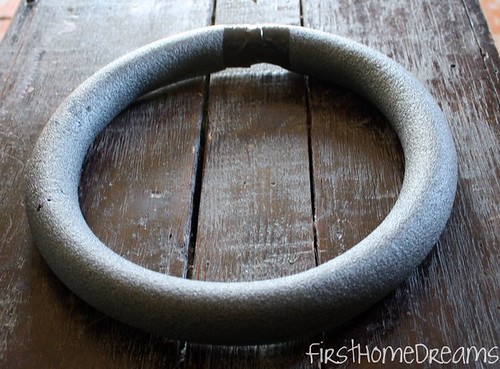
1. With your piece of foam pipe insulation, create a circle, taping the ends together to hold. I used electrical tape, but duct tape would also work well.

foam insulation wreath form

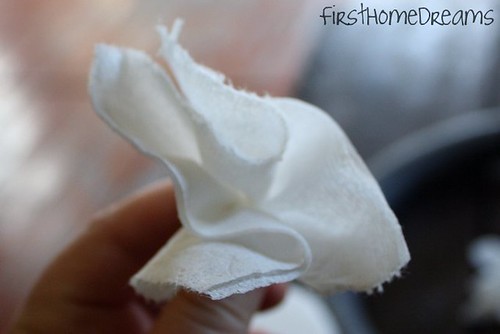
2. Tear off individual squares of toilet paper, relatively carefully (unless you want an even shabbier look). Fold, squish, twist or whatever else you need to do to get a shape resembling some sort of flower.

toilet paper christmas wreath

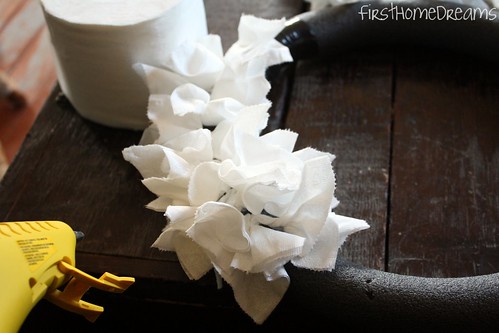
3. With your glue gun, apply a small amount to the end of your toilet paper "flower", and stick it to your wreath form. Be careful! If your glue is too hot, you will melt the foam and make a big hole. I have a feeling my glue gun is hotter than most, though (as evidenced by the huge blister I have on my palm - ouch). I applied them in an alternating fashion - one sticking out one way, the next sticking out the other way. When I had gone all the way around the wreath, I filled in any gaps with more "flowers".

toilet paper christmas wreath

4. While I gave the hot glue a chance to set up, I made my bow. I can never tie a bow flat, so I made one out of two seperate pieces of ribbon. First, each piece was folded into an awareness ribbon shape, and the point of contact was secured with a dab of hot glue. Then, I glued the two together.

ribbon bow


5. Next, I looped a length of ribbon around the top of the wreath, and secured the ends together with another dab of hot glue. Before securing, I made sure that the loop was arranged in a way so that the wreath would lie flat against the wall (not pictured, sorry). I attached my bow to the ribbon loop with glue.

6. To hang my wreath, I used a decorative thumbtack that I had on hand. I stabbed the thumbtack through the center of the bow, and I think it finished the bow off nicely since it didn't really have a center. If you are planning on hanging your wreath somewhere other than a wall, you may want to use a button or something similar that doesn't have a pokey end sticking out the back.

ribbon bow


7. Hang in the location of your choice! I chose to put it above the french doors in our living room.

toilet paper christmas wreath

I hope you liked this quick and easy tutorial!

Lock It Up!

January 25, 2012

On Monday, I let you know I had a little somethin' somethin' in the works for the bathroom. We have just under a month until we're ripping into the ugliest room in the house, so I'm getting as many little things as I can done before we start.

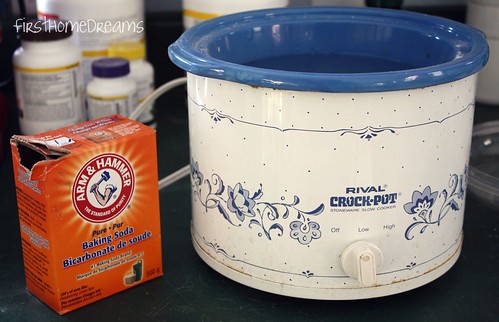
So what does a crock pot and steel wool have to do with, well, anything?

Restoring antique hardware!


The bathroom door is a solid wood 4 panel door typical of Victorian homes. These doors would either have a mortised lock or a rim lock - it's not very often that a door was fitted with just a knob. Our door is covered in layers and layers of paint, but we could see the shadow of where a rim lock used to be, and the keeper was still attached to the jamb. Whatever happened to the original rim lock? Who knows.

 
From left to right: 4-panel door, mortise lock, rim lock (please click for picture source).

There was another keeper hanging out in a door-less door frame on the other side of the kitchen (I suspect that the bathroom was originally a pantry *note to self: share a floor plan one day* - apparently back in the day people felt the need to be able to lock their kitchens and their pantries off from the rest of the house). We found the missing door in the shack before it collapsed, and it still had it's rim lock - hooray! We have no intention of putting that door back in it's place (it's weathered and cracked beyond repair), so I removed the rim lock for the bathroom door.

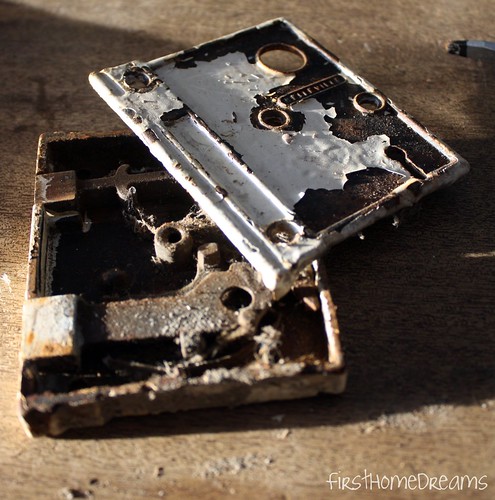
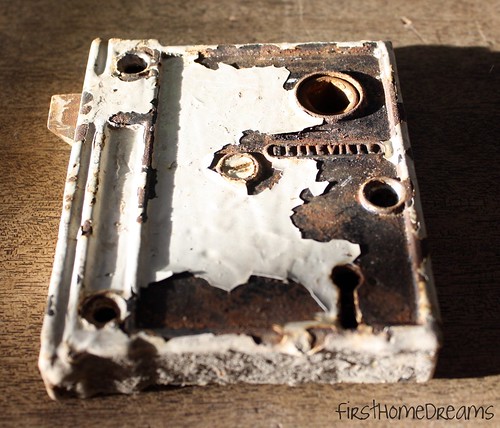
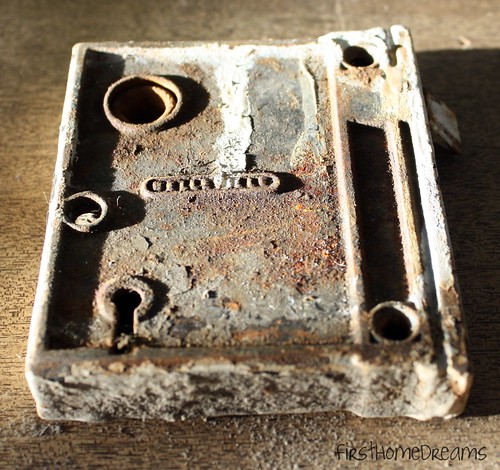
It was a hot mess, and that's being polite.

antique cast iron rim lock

antique cast iron rim lock

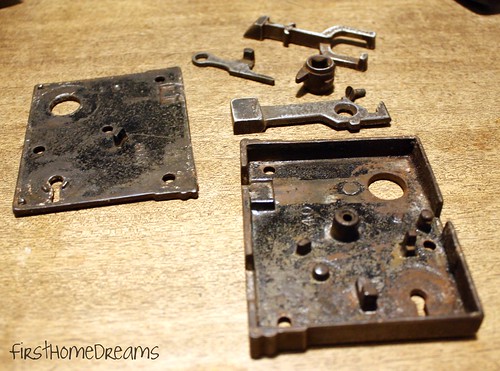
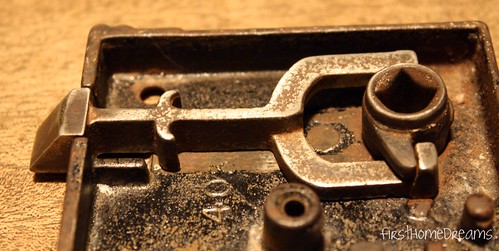
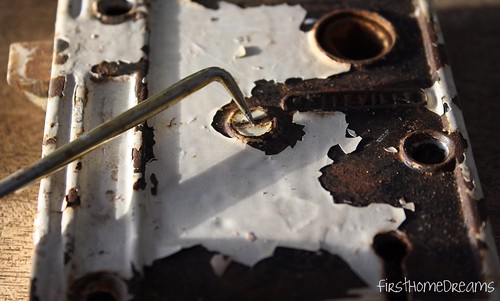
The first thing I had to do to get this back in working order was to take it apart. Since it had been caked in paint in a previous life, I used a dental pick type tool to scrape the paint out of the screwdriver notch (what's the real term for that?!).

Antique cast iron rim lock

I removed the screw - making sure I put it somewhere safe! - and the back came off easily.

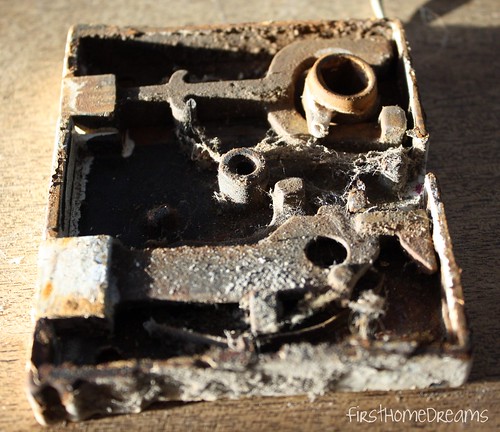
antique cast iron rim lock

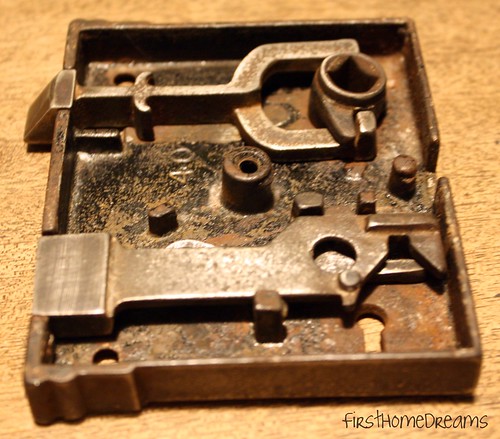
It was pretty gross in there. I have a feeling this thing hadn't been cleaned more than a handful of times.

antique cast iron rim lock

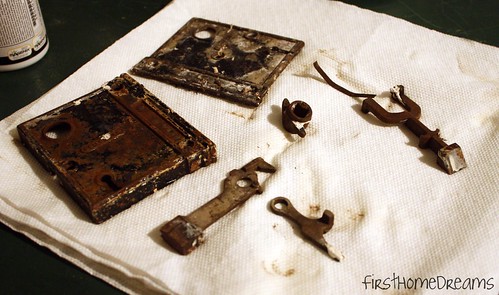
Before going any further, I took a million pictures before and in between removing each of the individual parts (there were 5 total pieces inside the casing). Once everything was removed, I was ready to move on to the cooking.

cleaning antique hardware


Crock pot, water, baking soda, hardware. Cook on low for a whole bunch of hours. I don't have a set time - it depends on how paint caked the hardware is. I've also had good luck using TSP instead of baking soda, and I've heard of people using dish soap with good results as well. So you can pretty much use whatever you have on hand. The water will turn really murky and gross as it cooks. I think it goes without saying that you should use an old crock pot that you will not be cooking food in.


A lot of old cast iron hardware has a powder like coat of black paint that is really hard to remove. Although I let these pieces cook for a lot of hours, I wasn't happy with how clean they were coming, so I decided to let them have a good soak in a chemical stripper. After allowing the chemicals to do their magic, I was rinsing/washing, scrubbing clean with steel wool, rinsing/washing, patting dry. This is an incredibly tedious and dirty process. I paid more attention to the moving parts and the sides of the casing that will be seen, rather than the inside (you can see evidence of that below).

restoring antique cast iron rim lock


restoring antique cast iron rim lock


restoring antique cast iron rim lock

At this point, I stared at and fiddled with this darn thing for probably 20 minutes trying to make it work, until I realized I was missing the mechanism to make the latch spring back into place. It's also missing a similar mechanism for the lock, but since we don't have the key anyway, I'm not concerned with making that functional. I found the piece I had forgot about (the skinny straight piece of metal), and positioned it so that when the doorknob wasn't being turned, it would force the latch back out. The final step before putting the cover back on was to liberally apply some WD40 to keep things moving smooth.

restoring antique cast iron rim lock

All of that to get to this:

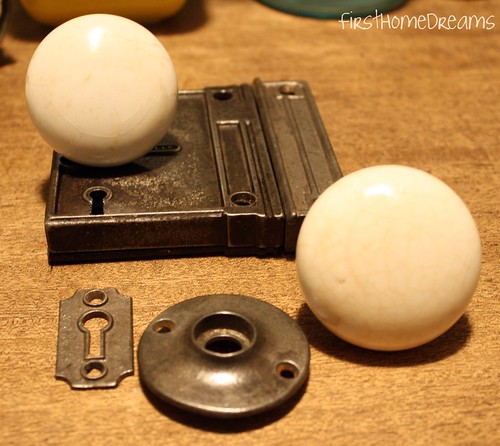
Restored Antique Cast Iron Rim Lock Porcelain Knobs


A 113 year old piece of hardware that still works! Although I'm not perfectly happy with it yet. All of the pieces, including those on the inside, need another once over with steel wool. Once any remaining specks of rust (and blackness on the case) are removed, everything is going to get a coat of poly to prevent any further rusting. Of course I'll have to clean all of that WD40 off of everything first, and then reapply it once the poly is dry. So many steps. Worth it? Heck yes.

Update! See this lock re-installed here.


I'm linking this post to...
The Shabby Nest

Home Stories A2Z

Blog Design by Nudge Media Design | Powered by Blogger